
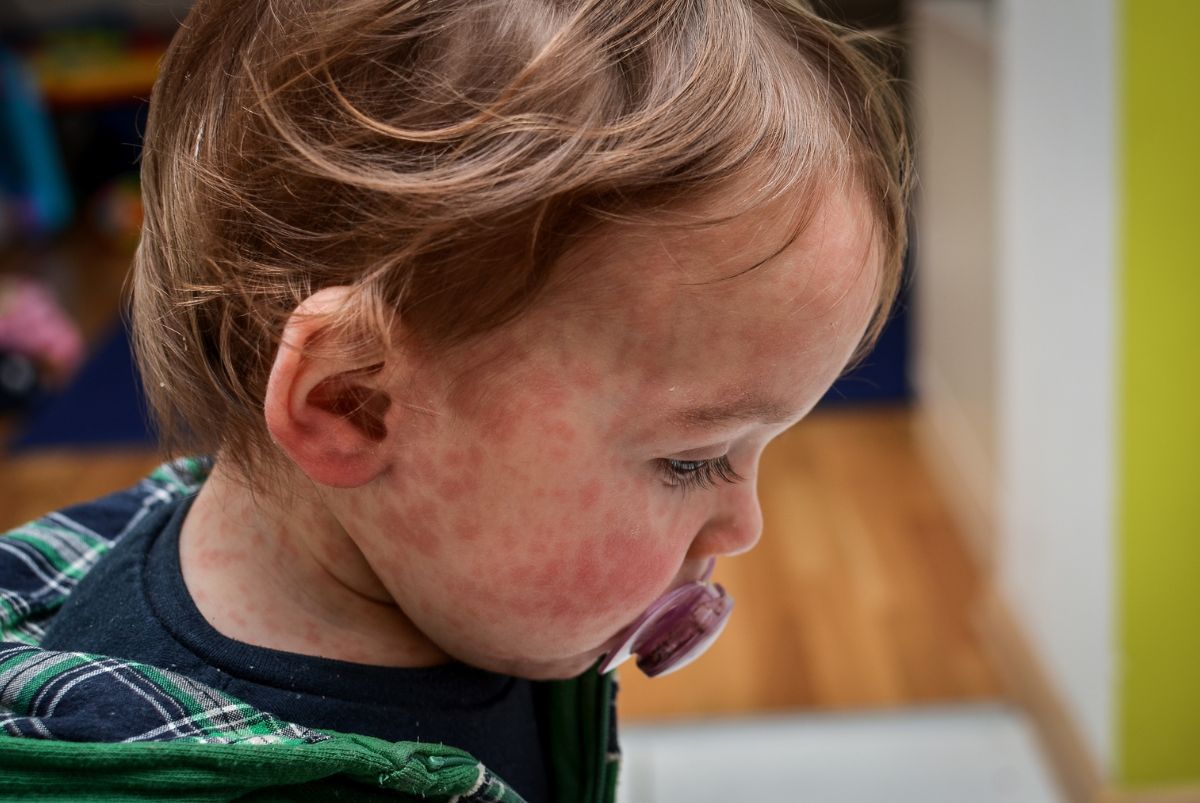
Just as kids are going back to school in much of the country, the U.S. has reached the highest number of measles cases in 35 years. Measles was officially declared eliminated in the U.S. back in 2000, but more cases have been reported in the past 18 months than there have been in the previous 25 years combined.
As of last week, there have been 38 new measles outbreaks and 2,566 confirmed measles cases reported to the U.S. Centers for Disease Control and Prevention (CDC) in 2026 alone. These cases have been spread out among 45 states plus Washington, DC. Most measles cases are among children, and 96 percent of cases are in unvaccinated individuals, according to Johns Hopkins University.
Why is measles having a resurgence, and how can it be prevented?
Two doses of the measles vaccine protects an estimated 97 percent of those vaccinated. However, the rate of measles, mumps, and rubella (MMR) vaccination among U.S. kindergarteners has dropped from 95.2 percent during the 2019–2020 school year to only 92.5 percent during the 2024–2025 school year. Unfortunately, this significant decline in coverage over the past few years has eroded the herd immunity that the country used to benefit from.
Andrew Racine, MD, PhD, president of the American Academy of Pediatrics (AAP), called this situation a “public health failure.” The current outbreaks are a stark reminder that vaccine-preventable diseases can return when immunization rates decline.
Mass firings at the CDC, along with the U.S. Department of Health and Human Services’ decision to delay or remove recommended vaccines, has contributed to putting kids’ and communities’ health at risk. A recent executive order to split the MMR vaccine into three separate shots goes against scientific recommendations.
Measles is one of the most contagious diseases in the world, and typically spreads through the air when an infected person coughs, sneezes, or talks. Measles causes a blotchy rash, high fever, and cold-like symptoms, but the infection can also lead to serious complications, including pneumonia and encephalitis (inflammation of the brain).
Pediatricians warn that there is no way to know if a child will develop serious illness from measles, so vaccination remains the best way to protect children and communities. High community vaccination rates also help keep the disease away from young babies and others (such as cancer patients) who cannot receive measles vaccines. Be sure to check that your family is up to date on immunizations, and check your child’s school’s vaccination rate.