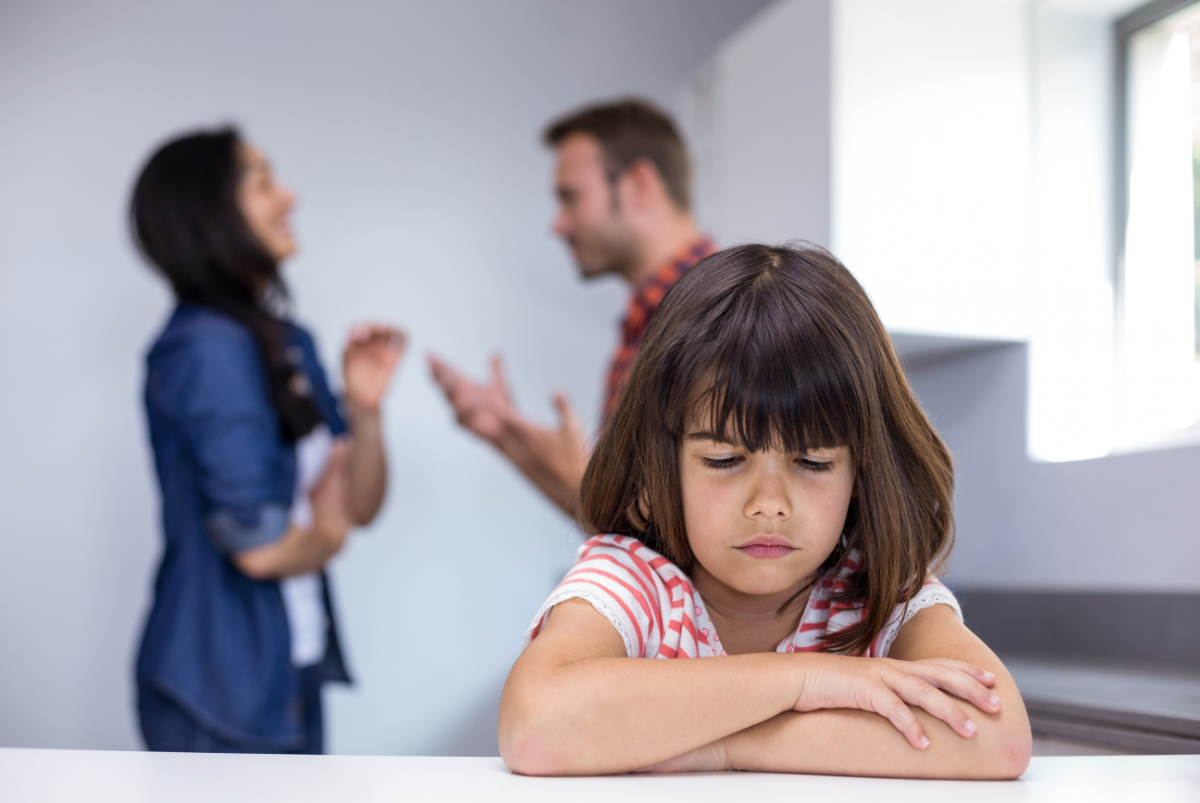
No parent wants to fight with their partner in front of their children, but conflict is an unavoidable part of every relationship. What matters most is how parents model healthy conflict and repair in the moment.
Kids don’t need perfect adults in their lives who never disagree. What they need is to see that disagreements can be worked through and that they’re still safe even when adults are upset. When the adults in their lives pretend arguments never happened or avoid talking about them, kids can internalize anxiety and confusion about interpersonal conflict. They might even blame themselves.
Repairing with kids after they witness a conflict
The repair conversation matters more than the argument itself. You’re showing them that people who love each other can disagree and still be okay. Here are some tips to keep in mind while checking in with your child after they witness an argument—
- Don’t pretend it didn’t happen—kids know what they saw.
- Keep your explanation simple and age-appropriate—don’t overshare adult details.
- Reassure them about their safety and the stability of your relationship.
- Model accountability and repair with your partner.
Your child is watching how you handle conflict and repair. Teaching them that disagreements are normal and can be resolved is one of the most valuable lessons you can give them about relationships.
What to say to your kids after they witness an argument
Here are three things to say to your child after arguing with your partner in front of them. These three phrases help you address what happened in an age-appropriate way, reassure your child, and model healthy conflict resolution—
“Sometimes adults disagree about things, and we didn’t handle it well in that moment. We’re working on it. You’re safe, and this isn’t your fault.”
This models accountability and teaches kids that people who love each other can have hard moments and still be okay. The explicit “this isn’t your fault” is crucial because kids often assume they caused problems they witnessed.
“Even though we were upset with each other, we still love each other and we love you. People who love each other sometimes disagree—that’s normal.”
This provides the reassurance your child needs most. When kids witness conflict between their parents, their sense of safety can feel threatened. This phrase normalizes disagreements as part of relationships, and separates the argument from the stability of your family and your love for them.
“We’re going to talk about it and figure it out together. That’s what people do when they care about each other—they work through hard things.”
This shows your child what healthy conflict resolution looks like. They learn that disagreements aren’t the end—repair and communication come next. You’re also teaching them that working through problems is a sign of a strong relationship, not a weak one.
Arguments happen. What your child learns from how you handle them afterward is what stays with them. When you repair and model healthy communication, you’re teaching them skills they’ll carry into their own relationships.