
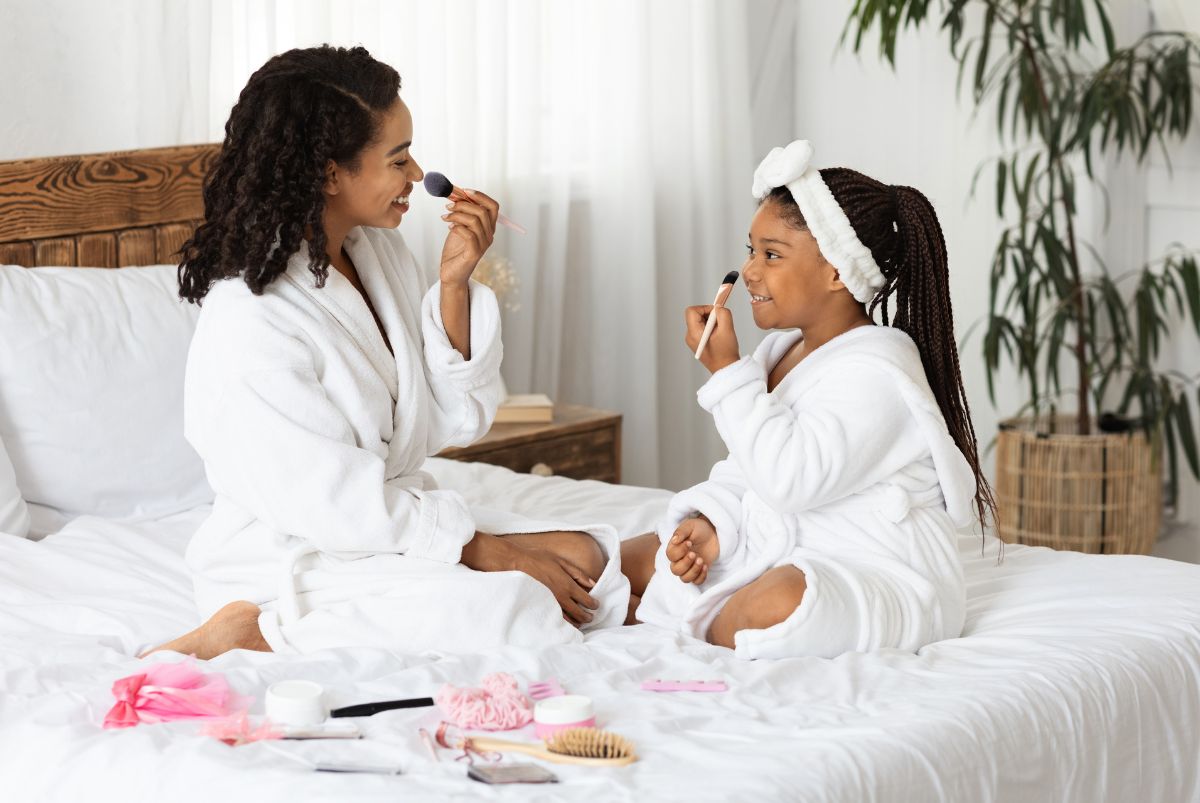
When your child asks about makeup, your answer matters more than you might think. A child’s perception of the value of physical beauty is beginning to form at a very early age, and is heavily influenced by how their parents and close loved ones talk about physical appearance.
A common situation that can influence a child’s ideas about physical appearance—particularly regarding women and feminine people—is witnessing their mother, aunt, or another older friend or family member applying makeup. Because makeup is commonly perceived as a way to enhance or improve someone’s physical appearance, kids may form harmful or stereotypical beliefs based on their experiences.
For example, if your child notices that you rarely leave the house without putting on makeup, they may jump to the conclusion that women don’t feel presentable or attractive without makeup. Or, if you rarely wear makeup, they could make assumptions about people who do, like that they only care about their looks.
3 things to say to kids about makeup
If your child asks why people wear makeup, or why you’re putting on makeup during your morning routine, these three responses can help teach them healthy attitudes about beauty, without lecturing or shaming—
- “It’s a way I express myself, like when you choose your favorite t-shirt.” This connects makeup to self-expression and creativity rather than fixing flaws. It compares it to choices your child already makes, helping them understand it’s about personal preference.
- “It makes me feel ready for my day.” This frames makeup in terms of a feeling rather than appearance. It shows your child that getting ready is about preparation and confidence, not hiding insecurities.
- “I enjoy the ritual of applying it—it’s my quiet time.” This emphasizes the mindful, self-care aspect of using makeup. It shows children that taking time for yourself is valuable and that the process itself can be enjoyable.
These responses resonate with kids and help teach them positive beliefs about self-care, rather than focusing on physical appearance. They work because they’re honest, age-appropriate, and reinforce that makeup is a personal choice, not a fix for some perceived inadequacy. Those beliefs will help them feel more confident in themselves as they grow up, and will give them pause before jumping to conclusions about others based on how they look.